


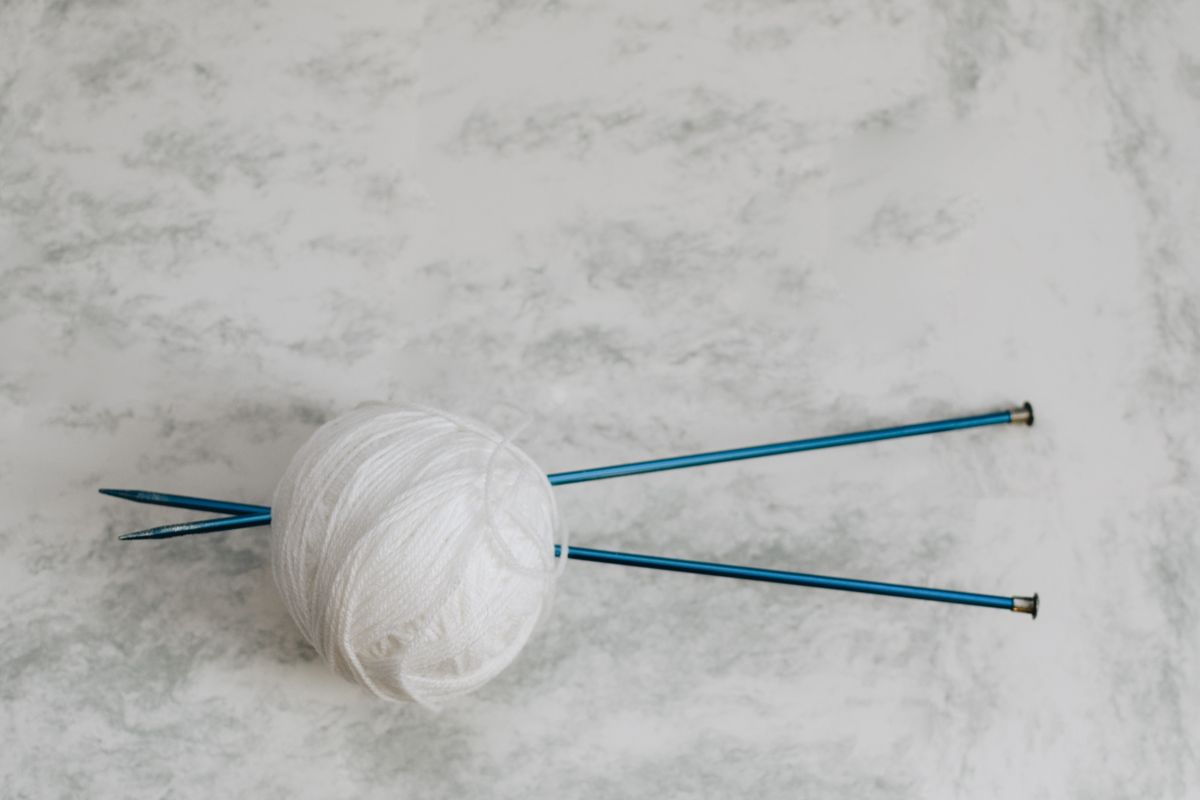

Yes, knitting needles are allowed on planes in carry-on and checked baggage. TSA has no specific rule against them. The one thing to know: TSA recommends circular needles over straight needles for carry-on because straight needles with long pointed ends give agents more pause. Circular needles are almost never questioned. Straight metal needles occasionally are, though they usually pass too.
Here’s the practical breakdown for traveling with knitting needles, crochet hooks, yarn, and scissors.
Table of Contents
TSA Rules for Knitting Needles
Knitting needles are listed as allowed by TSA in both carry-on and checked baggage. The full TSA statement: “Knitting needles are allowed in your carry-on baggage or checked baggage. However, there is always the possibility that a TSA officer may determine that an item not on the prohibited items list is dangerous and may not be allowed through the checkpoint.”
That last sentence matters. TSA agents have final discretion, and a long pair of metal straight needles could theoretically get flagged as potential weapons. In practice, this is uncommon. Most knitters travel with their needles without any issue. But it’s real enough that TSA’s own guidance recommends circular needles as the safer carry-on option.
Circular vs Straight Needles for Travel
Circular needles are the better travel option for three reasons:
- They’re less likely to be flagged by TSA agents because the cable between the tips makes them look less like weapons
- They’re more compact in your bag. A full circular needle set folds up much smaller than a set of straight needles.
- They can be used for most knitting projects that straight needles handle, including small circumference work with two circulars or magic loop
If you prefer straight needles and don’t want to switch, they’re still usually fine. Just use checked baggage if you have it to avoid any potential checkpoint friction.
Needle Material: Wood, Metal, or Plastic?
All three materials pass TSA security. Wood and plastic needles tend to raise fewer questions than metal needles, partly because they look less intimidating on X-ray. For carry-on travel, bamboo or wooden circular needles are the least likely to be questioned. Metal needles are fine too. They just look sharper on the X-ray screen.
Interchangeable needle sets (like Knitter’s Pride or ChiaoGoo) work well for travel because you can bring a compact case with multiple tip sizes and cable lengths without needing a separate needle for every project.
Crochet Hooks on Planes
Crochet hooks are also explicitly allowed in carry-on and checked by TSA. They’re less likely to raise questions than straight knitting needles because they have a single blunt hook at the end rather than two long pointed tips.
Scissors for Cutting Yarn
This is where knitters run into the most friction at security. TSA’s rule on scissors: blades 4 inches or shorter (measured from the pivot point) are allowed in carry-on. Anything longer goes in checked.
The problem: most craft scissors and fabric scissors are over 4 inches. If you’re packing scissors specifically for yarn, bring a small pair of embroidery scissors or nail scissors with blades well under 4 inches, or use one of these alternatives:
- Thread cutters and yarn cutters: Small pendant-style yarn cutters with a concealed blade are allowed in carry-on and work great for snipping yarn ends mid-flight
- Dental floss containers: The serrated cutter on a dental floss container can cut yarn in a pinch
- Ceramic yarn cutters: Often allowed where metal ones might be questioned, though any cutting device is still at the agent’s discretion
Yarn on Planes
Yarn has no TSA restriction whatsoever. You can carry any quantity of yarn in carry-on or checked. Yarn isn’t a liquid, isn’t a weapon, and raises no security concerns. The only practical limit is weight and space in your bag.
For knitters who want to maximize carry-on knitting time, pack a project in a zip-lock bag inside your carry-on with needles, yarn, and a small yarn cutter. Having everything in one place means you can pull it out during the flight without digging through your whole bag.
International Rules for Knitting Needles
Most countries follow rules similar to TSA. Knitting needles are allowed in carry-on with no specific prohibition. However, the same agent-discretion caveat applies everywhere. A few specifics:
- UK: Allowed in carry-on and checked. UK security tends to be less focused on knitting needles than TSA.
- EU: No specific prohibition. Allowed in both.
- Canada: Allowed in both.
- Australia: Allowed in both, though Australian security screens thoroughly and an agent can flag anything at discretion.
No country has a blanket ban on knitting needles in carry-on, but since you’re dealing with individual agent discretion everywhere, circular needles in wood or plastic remain the safest universal choice.
What to Do if Your Needles Get Flagged
If a TSA agent decides your needles aren’t passing, you have a few options:
- Gate-check them. If you haven’t dropped checked bags yet, go back to the ticket counter and have the needles added to your checked bag.
- Mail them home. Some larger airports have mailing kiosks. For expensive needles (like a nice ChiaoGoo or Addi set), it’s worth the stamp.
- Surrender them. For inexpensive needles, letting TSA keep them is sometimes the simplest answer. This is exactly why the “bring a self-addressed stamped envelope” advice exists, though honestly most travelers don’t bother for anything under $20.
Frequently Asked Questions About Knitting Needles on Planes
Are knitting needles allowed in carry-on?
Yes. TSA explicitly allows knitting needles in carry-on and checked baggage. The caveat is that individual agents have final discretion, and long straight metal needles occasionally get questioned. Circular needles and short needles rarely have any issue.
What type of knitting needles are best for travel?
Circular needles, especially in wood or bamboo. They’re compact, less likely to be questioned at security, and versatile enough to handle most projects. An interchangeable needle set in a compact case is the most travel-efficient option for knitters who work on multiple projects.
Are crochet hooks allowed on planes?
Yes, in carry-on and checked. TSA explicitly allows crochet hooks. They’re less likely to raise questions than straight knitting needles because they have a single blunt hook rather than two pointed tips.
Can I bring scissors for cutting yarn on a plane?
Only if the blade is 4 inches or shorter from the pivot point. Most craft scissors and embroidery scissors over 4 inches go in checked baggage. Alternatives for carry-on: small pendant-style yarn cutters, the serrated edge on a dental floss container, or very small embroidery scissors with short blades.
Can I bring yarn on a plane?
Yes, any quantity with no restriction. Yarn is not a liquid or a dangerous item. TSA has no rule against yarn in carry-on or checked bags.
What if TSA confiscates my knitting needles?
Your options are: gate-checking them to your checked bag (if you haven’t dropped bags yet), mailing them home from an airport kiosk, or surrendering them. For expensive needles, asking politely if you can mail them before they’re confiscated is worth trying. Most agents will allow it.
Read Next: Can You Bring Makeup on a Plane?