


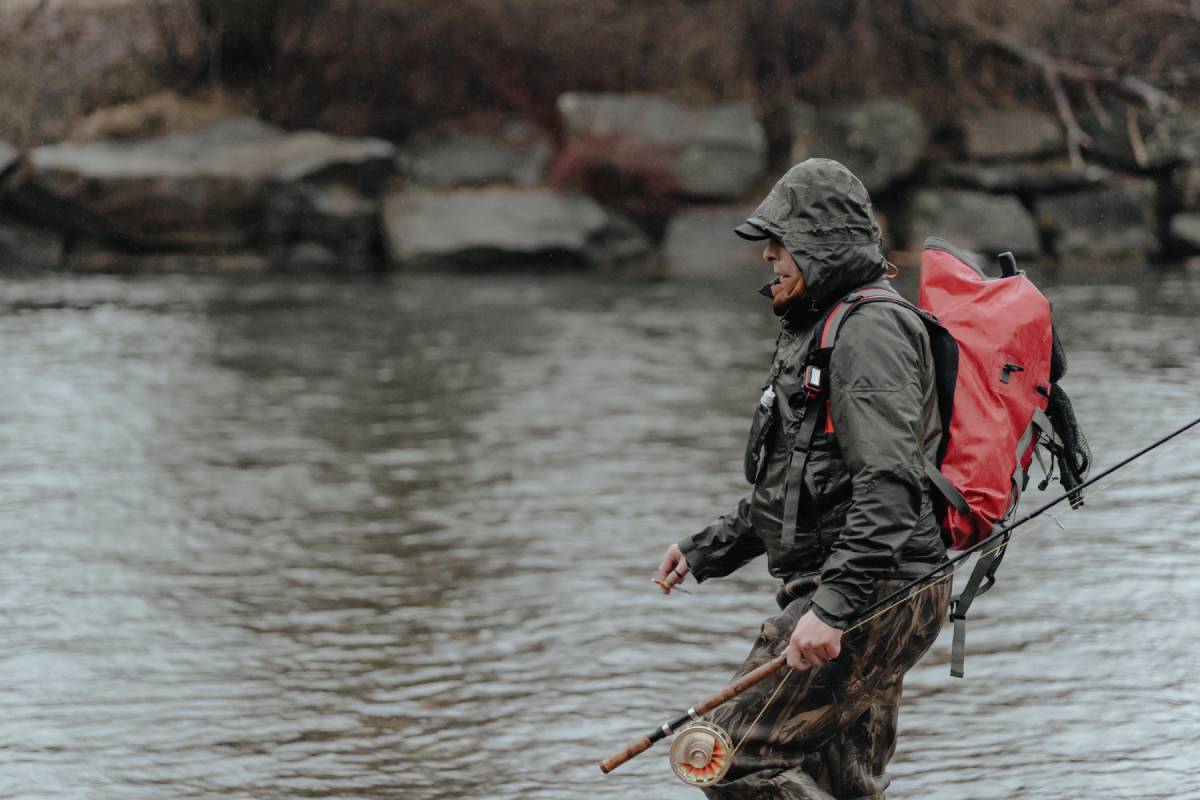

Most fishing gear is allowed on planes, but where it goes depends on the item. Fishing rods are technically permitted in carry-on if they fit, but most don’t. They usually have to be checked. Hooks and lures with exposed hooks must go in checked baggage. Tackle boxes, reels, and line are allowed in both but are generally easier to check.
Table of Contents
Fishing Rods: Carry-on or Checked?
TSA allows fishing rods in both carry-on and checked baggage, but the practical reality is that most rods are too long to fit in an overhead bin. Standard fishing rods collapsed or in a tube are typically 6 to 9 feet, which makes them incompatible with carry-on storage. The exception is travel rods or telescoping rods that collapse to 20 to 30 inches, which could physically fit in some overhead bins if they’re within carry-on size limits.
For most fishing trips, the rod goes in checked baggage in a rod tube or rod case. A hard-sided rod tube (dedicated rod case) is the safest option. Many airlines treat this as standard checked luggage if it’s under 62 linear inches and 50 lbs. Longer rod cases may be subject to oversize fees, so check with your airline before booking.
Hooks, Lures, and Sharp Tackle
This is the most common point of confusion:
- Fishing hooks: Sharp objects. They must go in checked baggage and cannot be in carry-on. Pack them in a tackle box, in a covered tray, or with the hooks protected to avoid cutting through the bag or injuring baggage handlers.
- Artificial lures with hooks attached: Must be checked. The exposed hooks make them prohibited in carry-on.
- Artificial lures without hooks (bodies only, no hooks attached): These may pass in carry-on since there are no sharp elements.
- Spoons, spinners, jigs: If they have exposed hooks, they go in checked. If hooks are removed, they may be allowed in carry-on at the agent’s discretion.
Tackle Boxes
A full tackle box typically contains hooks, lures with hooks, small scissors, and sometimes fishing knives. All of those are restricted in carry-on. Checking the entire tackle box is the straightforward approach. If you want to bring a small tackle box in carry-on, remove all hooks and prohibited items first, and check the remainder. Most travelers just check the tackle box entirely.
Other Fishing Gear
- Fishing line: Allowed in carry-on and checked. No restriction.
- Fishing reels: Allowed in carry-on and checked. No sharp elements, no restriction.
- Lead sinkers and weights: Allowed in carry-on and checked.
- Fishing knives and fillet knives: Checked only. Blades over 4 inches are prohibited in carry-on. Even smaller blades on fishing knives are often fixed-blade types that exceed TSA carry-on rules.
- Fishing pliers and hook removers: Pliers with points or blades may be flagged in carry-on. Checked is safer for multi-tool fishing pliers.
- Waders and boots: Allowed in carry-on and checked. No TSA restriction.
- Fresh or frozen fish: Allowed in carry-on and checked. TSA allows it. The question is whether international customs at your destination restricts bringing fish or seafood across the border.
International Travel: Customs and Fishing Regulations
Beyond TSA, international destinations have their own rules. A few specific areas to check:
- Bringing fish home from a fishing trip: Many countries and US customs restrict bringing fish back across international borders. Commercially packaged and labeled fish is generally allowed. Fresh unpackaged fish from a personal catch may be restricted or require inspection. Check USDA APHIS regulations and the customs rules of your destination country before bringing fish internationally.
- Fishing licenses: A valid local fishing license is required in virtually every jurisdiction. Research the fishing license requirements for where you’re fishing, not just the travel rules for your gear.
- Protected species bait or lures: Some countries restrict importing certain types of bait (live bait especially) due to invasive species concerns. Leave live bait at home for international travel.
Frequently Asked Questions About Fishing Gear on Planes
Can I bring a fishing rod on a plane?
Technically allowed in carry-on and checked, but most rods are too long to fit in an overhead bin. Standard rods go in checked baggage in a rod tube or rod case. Travel rods and telescoping rods that collapse to under 22 inches may fit as carry-on, but verify with your airline.
Can I bring fishing hooks in my carry-on?
No. Fishing hooks are sharp objects and must be in checked baggage. Pack them in a covered tackle box or with individual hook covers to protect the bag and baggage handlers.
Can I bring a tackle box in my carry-on?
A full tackle box with hooks and lures cannot be in carry-on. If you remove all hooks and sharp items, remaining items may pass. Most anglers simply check the entire tackle box.
Can I bring fresh fish home on a plane?
TSA allows fresh fish in carry-on and checked bags. For international travel, the relevant rules are US customs and the export rules of the country where you caught the fish. Commercially packaged fish is generally accepted. Fresh unpackaged personal-catch fish may be subject to inspection or restriction.
Can I bring a fillet knife on a plane?
Only in checked baggage. Fillet knives are too long (typically 6 to 9 inch blades) to be allowed in carry-on regardless of the sheath. Any blade over 4 inches is prohibited in carry-on.
How should I pack a fishing rod for a flight?
Use a hard-sided rod tube rated for fishing rods. Measure the total length. Most airlines allow rods up to 62 linear inches under standard checked bag rules. Tubes over that limit may be subject to oversize fees. Label the tube with your contact information.