


Important note: Spirit Airlines filed for Chapter 11 bankruptcy in November 2024 and has been going through financial restructuring. Before booking with Spirit, check current flight availability and the status of their operations, as schedules and routes may be affected.
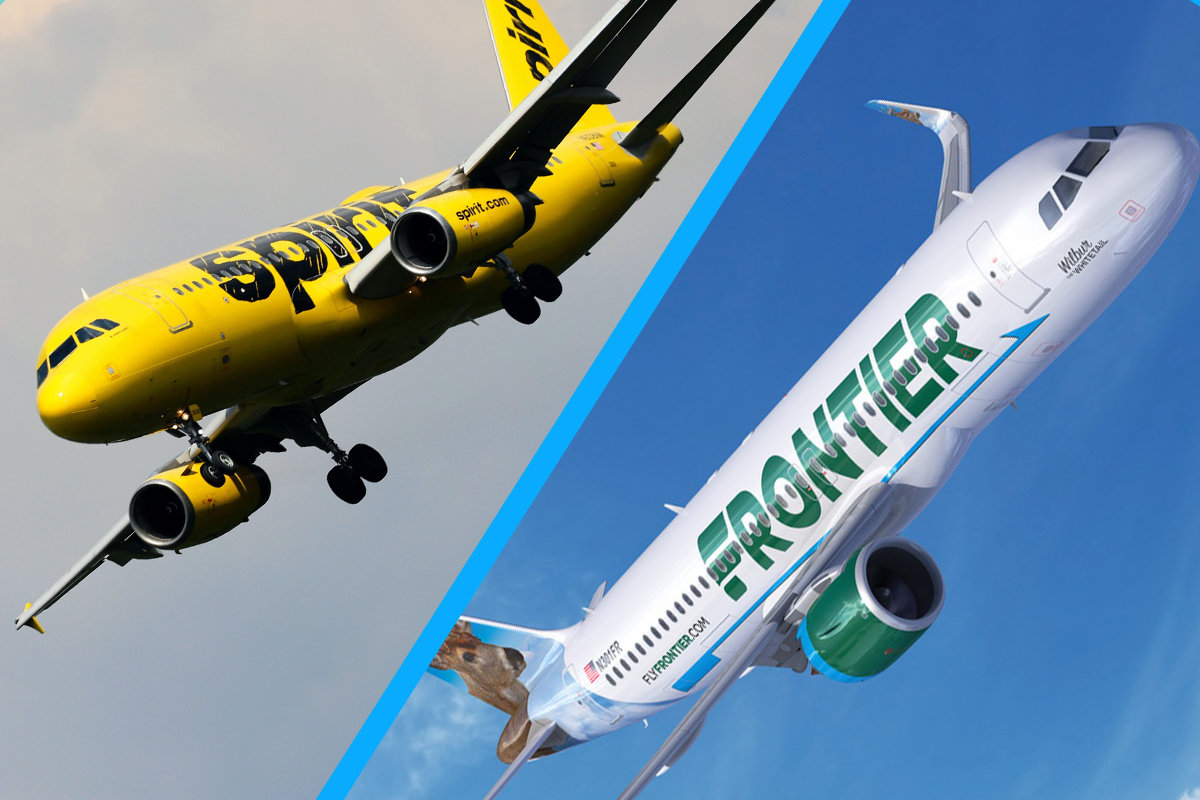
Frontier and Spirit are both ultra-low-cost carriers (ULCCs) with similar business models: very low base fares and charges for almost everything else. The main differences are route networks (Frontier is stronger domestically, Spirit has more Caribbean and Latin America coverage) and the total fee structure. Always compare total cost including bags and seat selection. Headline fares are rarely the real price with either airline.
Table of Contents
How Ultra-Low-Cost Carriers Work
Both Frontier and Spirit use the same model: the base fare covers the seat and nothing else. A personal item (small bag that fits under the seat) is typically free. Everything beyond that is charged separately:
- Carry-on bag: paid add-on ($40 to $65 depending on route and when you buy)
- Checked bag: paid add-on ($35 to $65 per bag)
- Seat selection: paid (free seats are usually middle seats in the back)
- Snacks and drinks: bought on board, nothing complimentary
- Printing boarding pass at airport: fee at some airports
Buying bags at booking is significantly cheaper than at the airport or gate. On both carriers, the gap between online bag pricing and gate pricing can be $20 to $30 per bag per segment. Always add bags before arriving at the airport.
Route Networks

Frontier is headquartered in Denver and has a strong domestic US network. It serves over 100 destinations primarily within the US, with some Caribbean routes. Good option for domestic travel, particularly in the mountain west and midwest.
Spirit is headquartered in Fort Lauderdale and has significant Caribbean and Latin America coverage alongside US domestic routes. If you’re flying to budget Caribbean destinations (Puerto Rico, Jamaica, Cancun, Dominican Republic), Spirit often has competitive nonstop options from east coast cities.
Baggage Fees Comparison
Both airlines have similar fee structures but specific prices vary by route and booking timing. General comparison:
- Personal item (under seat): Free on both airlines if it fits the size limits
- Carry-on bag: Paid add-on on both, ranging roughly $40 to $65 per segment
- Checked bag (first): Paid add-on on both, roughly $35 to $65 per segment
Neither airline is consistently cheaper than the other across all routes. Run the numbers on your specific trip with all add-ons included before deciding. For routes where both operate, the difference in total price can be small enough that on-time performance and in-flight experience become the tiebreakers.
Personal Item Size Limits
- Frontier: Personal item max 18 x 14 x 8 inches. This is their “free” bag, and many small backpacks fit within this.
- Spirit: Personal item max 18 x 14 x 8 inches. Same size limit as Frontier.
Both airlines have gate agents who measure bags and charge fees for personal items that exceed the limits. If you’re flying with only a personal item, measure carefully before you go. See our guide to Frontier’s personal item enforcement for what to expect.
On-Time Performance and Reliability
Both Frontier and Spirit have historically ranked at or near the bottom of major US airlines for on-time performance in DOT reports. Neither carrier has a reliability advantage worth booking around. Check DOT’s latest on-time data before booking if this matters for your trip.
Verdict
Choose Frontier if: You’re flying domestic US routes, Frontier has better routing or timing for your trip, or you prefer a carrier not in financial restructuring.
Consider Spirit if: Spirit has a direct route to your Caribbean or Latin America destination that other carriers don’t, and you’re comfortable with the current financial uncertainty. Always check Spirit’s current operational status before booking.
For many travelers comparing these two carriers, the better question is whether either is actually cheaper than the major carriers once all fees are added. Southwest includes two free checked bags and has competitive base fares, so always compare the total price against Southwest before committing to Spirit or Frontier.
Frontier vs Spirit Airlines: Frequently Asked Questions
Is Frontier or Spirit cheaper?
It depends on the route and what add-ons you need. Both have similar fee structures and base fares. Always calculate total cost including carry-on bags, checked bags, and seat selection before comparing. Headline fares from either airline rarely reflect the real price of travel.
What is the personal item size for Frontier and Spirit?
Both airlines allow a personal item up to 18 x 14 x 8 inches for free. This must fit under the seat in front of you. Both airlines have gate agents who enforce this and charge fees for oversized personal items.
Is Spirit Airlines still operating?
Spirit filed for Chapter 11 bankruptcy in November 2024 and has been in financial restructuring. Check Spirit’s current status and your route availability before booking, as operations may be affected.
Is Frontier better than Spirit for domestic travel?
Frontier has a stronger domestic US network, particularly in the mountain west and midwest. Spirit has more Caribbean and Latin America routes. For purely domestic US travel, Frontier is typically the more comprehensive option.
Do Frontier and Spirit include carry-on bags?
No. Carry-on bags are paid add-ons on both airlines. Only a personal item (under-seat bag, max 18 x 14 x 8 inches) is free. A carry-on typically costs $40 to $65 per segment depending on route and when you buy. Buying at booking is significantly cheaper than buying at the airport.
Are Frontier and Spirit worth it?
Worth it on routes where they provide meaningful savings over major carriers after adding all fees. Not always worth it on routes where Southwest or another major carrier is close in price, since Southwest includes two free bags. Always compare total trip cost including all add-ons before booking.